Last March, I traveled to Aotearoa New Zealand on a study tour hosted by Ijumaa Jordan and Eliana Elias. One of my most significant take-aways from this experience was thinking about our image of the teacher and how we communicate that image through the way we structure and facilitate professional learning. For example, when we hold an image of the teacher as untrustworthy, as unintelligent, and as fragile we tend to create professional development systems that reflect that image. These systems are highly structured and lack rigor (both socio-emotionally and cognitively).
This might sound familiar. It is to me.
From my vantage, I see lots of professional development where teachers have little choice or agency. Instead, directors choose where and when to send teachers to workshops, the content of which is rarely aligned with what teachers themselves say they need and want to learn about. State level administrators make decisions (without teacher input) on what content needs to be offered. And federal policymakers attempt to micro-manage teacher practice by writing super detailed program standards and accountability rubrics.
To me, all this feels connected to a deeper image that our culture holds of teachers as untrustworthy. Which, let me be clear, I think is very much connected to our society’s view of women (who comprise more than 90% of our workforce), of immigrants, people of color and poor/working class people (who comprise a disproportionate share of our workforce), and of young children (the people we serve). When our society doesn’t take these groups of people seriously, it makes sense that our early childhood systems don’t take early childhood educators seriously.
I also see an obsessive focus on “the basics.” In New York, our training requirements emphasize minimum thresholds of quality–the kinds of things teachers must know to keep children safe, healthy, and alive. Of course, these things are important. We need kids to be safe, healthy, and alive. However, when we’re so laser focused on the basics, it communicates something to teachers about what we think they are capable of. We spend too little of our time and resources supporting educators and children to flourish, to thrive, to think critically, to maximize their full potential! Anti-bias topics are avoided because they are perceived as being “too advanced” and “too controversial,” for educators and children alike.
Research demonstrates time and again that the work of early childhood educators is very complicated, highly skilled work. It takes incredible intellect and emotional capacity. Heck, it even takes high levels of physical and spiritual development.
We are building brains. We are building communities. We are building society.
The good news is that early childhood educators are absolutely brilliant and very capable of engaging in these high levels of learning and practice. Imagine for a moment, what would professional development look and sound and feel like if this was our image of teachers?
In Aotearoa New Zealand, I had an opportunity to experience for myself what it’s like to be trusted and respected as an educator. Utilizing a Communities of Practice model, we engaged big topics like cultural appropriation and settler colonialism without one worksheet or textbook. The whole experience was not without structure, of course, but our facilitators clearly communicated (both explicitly and implicitly) that they believed we were strong, trustworthy, and intelligent. And within that context we rose to those high expectations.
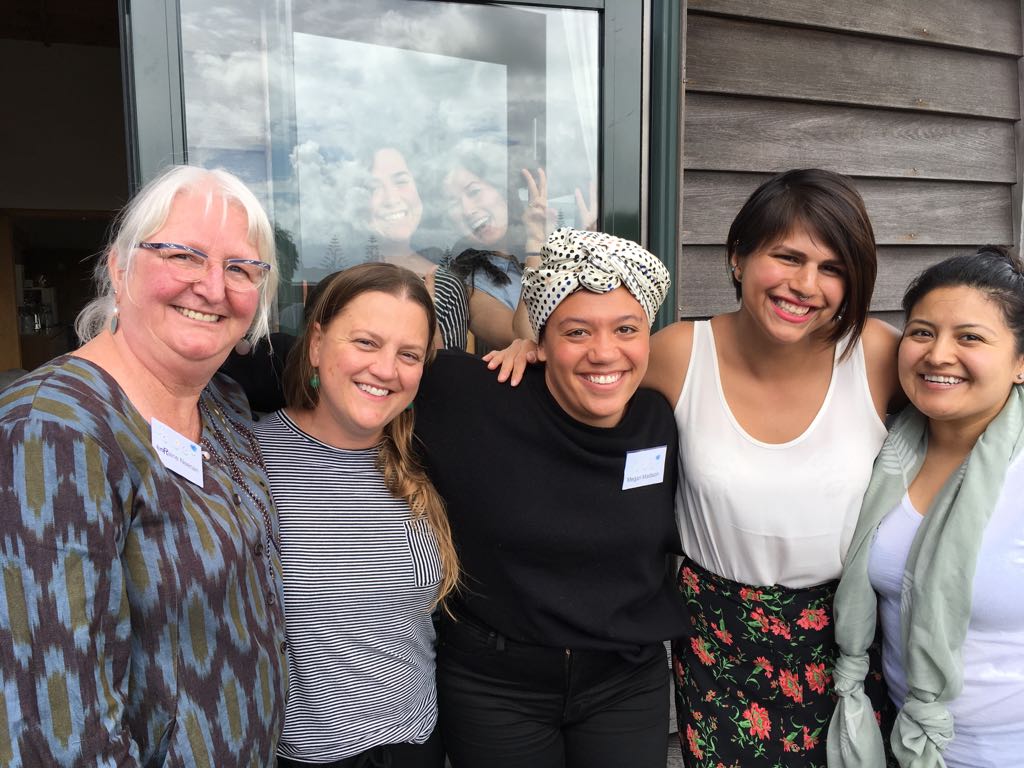
Since I’ve returned, I have been working on integrating this learning into my own practice as a professional development provider. One example was a workshop, From Non-Racist to Anti-Racist: Proactively Advancing Racial Equity in Early Childhood Policy, that I co-facilitated with Ijumaa at NAEYC’s 2018 Professional Learning Institute. During the workshop, we went in. We intentionally did not tiptoe around the topic, slowly easing the mostly white group into a conversation about racial equity. We decided to center the workshop around our needs and experiences as Black women. We went at our pace.
Within the first 5 minutes we were naming the lived impact of slavery, by minute 15 we were unpacking the concept of white supremacy culture, and by the 30 minute mark, we were walking through the core tenets of Critical Race Theory.
And guess what? It went great! In the words of one participant:
One of the best conference presentations I have attended. Thank you.
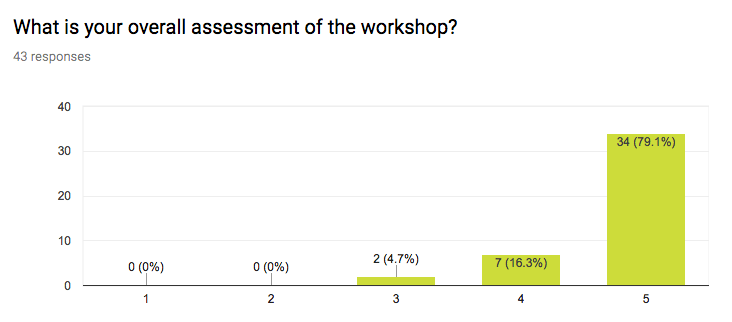
On our post-workshop evaluation form we asked participants to share: How do you think this workshop could have been made more effective? Of the 27 participants who responded to this question, 13 (or nearly half!) said they wished we had more time.
More time! Could have done this for 3 days.
To me, this highlights how hungry our field is to be trusted and respected enough to be given the time and space to really dig deep into these challenging topics. We are smart enough. We are brave enough. We are capable of engaging this content.
Another example is in participants’ descriptions of our strengths as facilitators. While several people responded that they enjoyed our sense of humor and our welcoming, personable, and engaging facilitation style, participants also noted that a key strength was our honesty. In the words of one participant, “no sugar coating happened.” In the words of another, our strength was in “being real/direct.”
In short, I think early childhood educators want to taken seriously. More importantly, we deserve to be taken seriously. Our work is serious work. Of course, it is also silly work, and loving work, and beautiful work. And it is serious. Every single day, early childhood educators are laying the social and political foundation of our society. Teachers spend approximately 8 hours a day, establishing the norms and patterns that will shape the culture of the next generation. That’s serious work. Like really serious work.
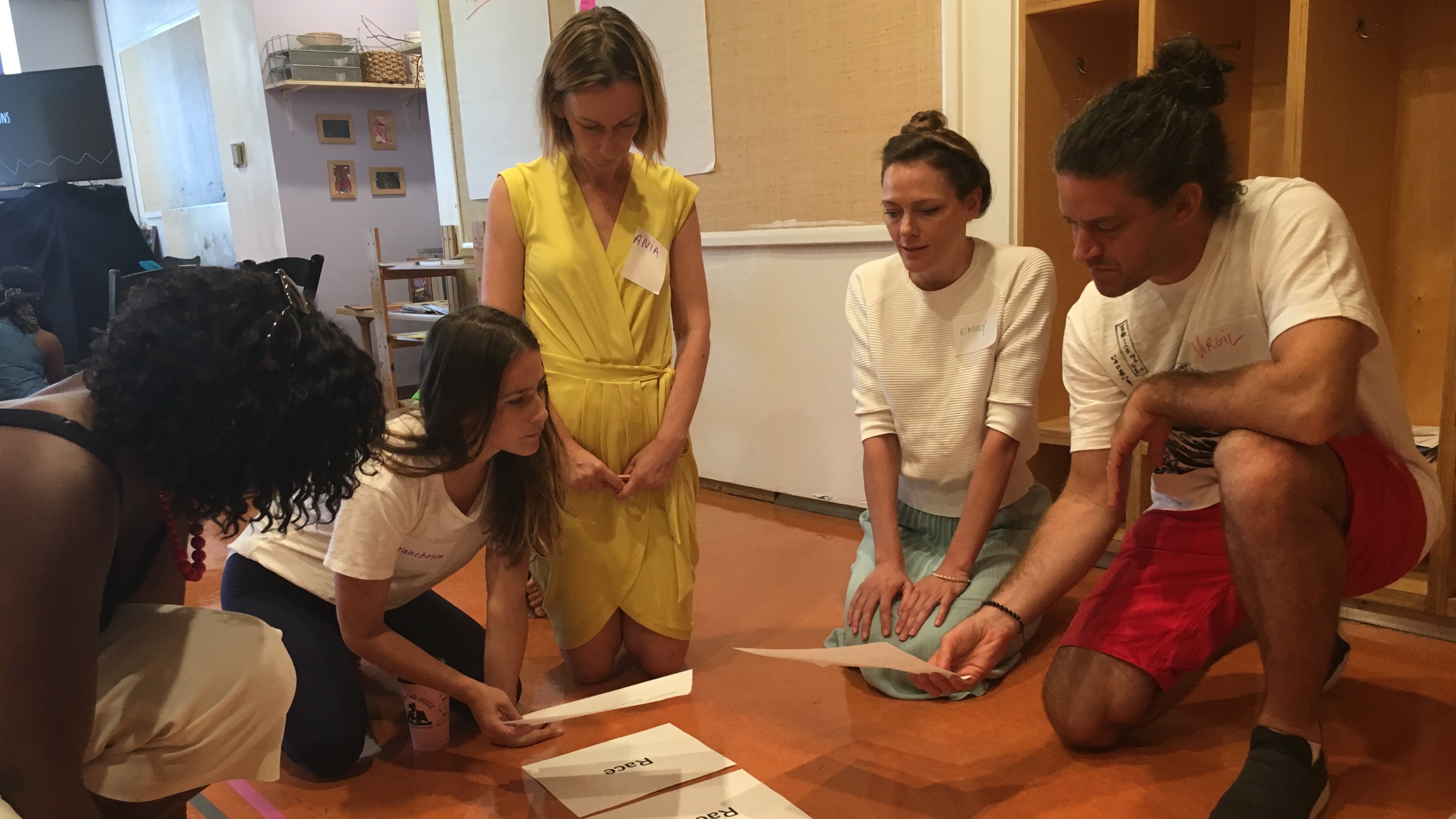
Inspired by these experiences, I look forward to continuing to integrate this high image of the teacher into the work I do. Alongside Kate Engle, I recently had an opportunity to witness what can happen when we put into practice what we know: that early childhood educators are brilliant, that transformation takes time, and that the work of early childhood education is highly political. I spent a full day with 17 early childhood educators digging into the history and analysis of anti-Black racism, and developing strategies to teach for Black lives. At the end of their evaluation form, one participant put it best:
More workshops like this!
 Dr. Megan Pamela Ruth Madison
Leave a comment